Women's Health | Investigation
84% of women over 50 have a menopause symptom their dentist has never mentioned — and it's quietly costing them their teeth
If your gums started receding, bleeding or pulling away from your teeth in your 40s or 50s, the cause may have nothing to do with how you brush — and everything to do with a hormone nobody connected to your mouth.
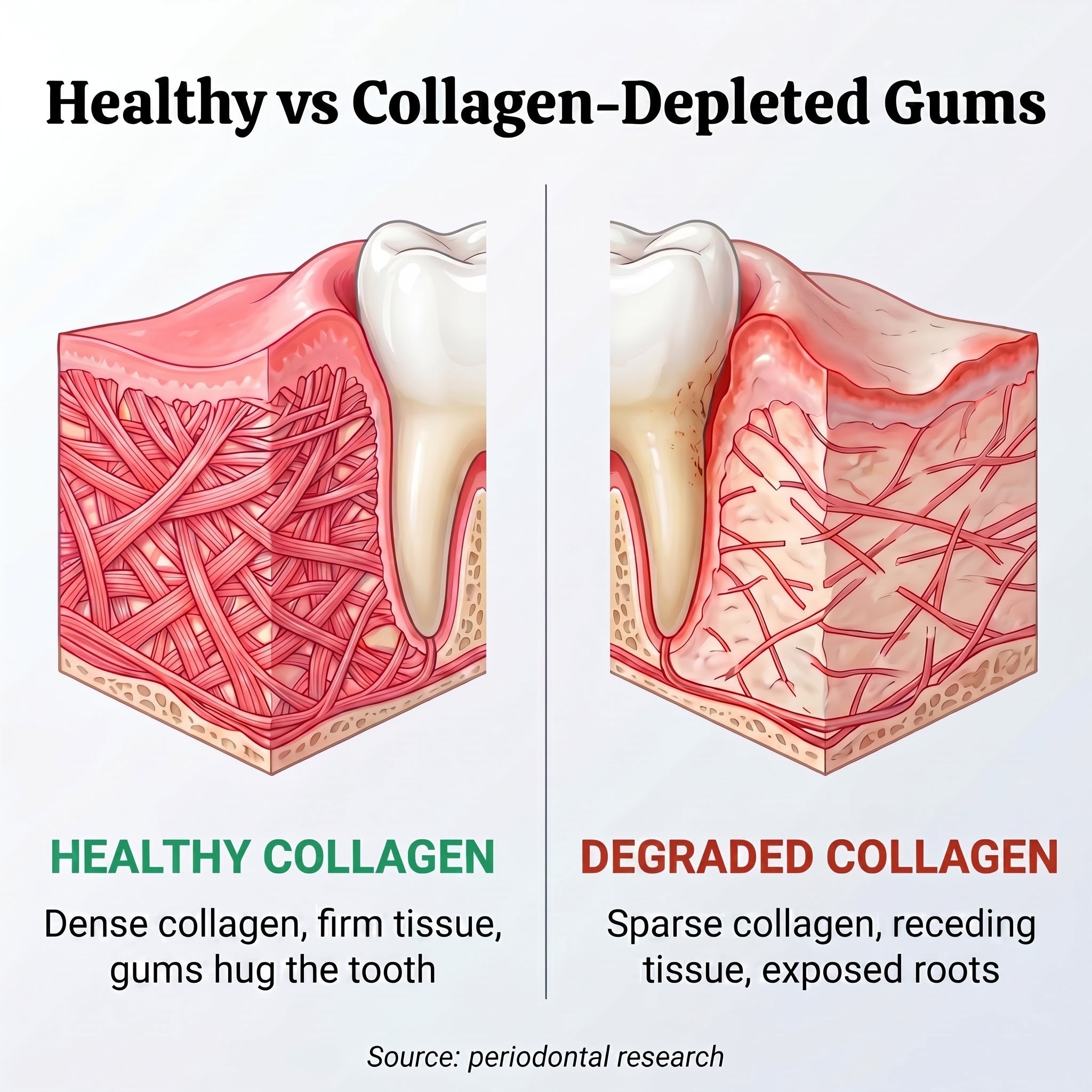
Walk into almost any dental office in Canada with receding gums and you'll hear one of three things: "Brush softer." "Floss more." "It's just aging." What you will almost never hear is the one word that explains why this is happening to so many women, so suddenly, at the exact same stage of life: menopause.
The mechanism no one explained to you
Your gums are roughly 90% collagen — the structural protein that keeps them firm and anchored to your teeth. The hormone that signals your body to produce that gum collagen is estrogen.
When estrogen falls during perimenopause and menopause, collagen production drops with it. The gum's scaffolding thins. After 50, the body can produce dramatically less collagen than it did at 40. The tissue weakens, inflammation sets in, the gums recede — and the teeth they once held firmly begin to loosen.
Estrogen builds collagen. Collagen holds the gums. When estrogen leaves, the gums lose their foundation.
This is why the usual advice fails. Brushing technique doesn't rebuild collagen. Sensitive toothpaste masks the nerve, not the cause. Even oral collagen supplements miss: when swallowed, the gut distributes collagen to skin, joints and bone — studies show only 1–3% reaches the gum line.
Why women keep being told it's their fault
The pattern is almost a script: the gynecologist treats the hot flashes and stops there. The family doctor calls it stress. The dentist points at brushing. The hygienist points at flossing. The insurance caps out right as the bill arrives. Women describe quotes of $8,000, $12,000 for work their plans won't cover. The most common sentence in these communities isn't about pain. It's: "I thought I was the only one."
What actually reaches the gum line
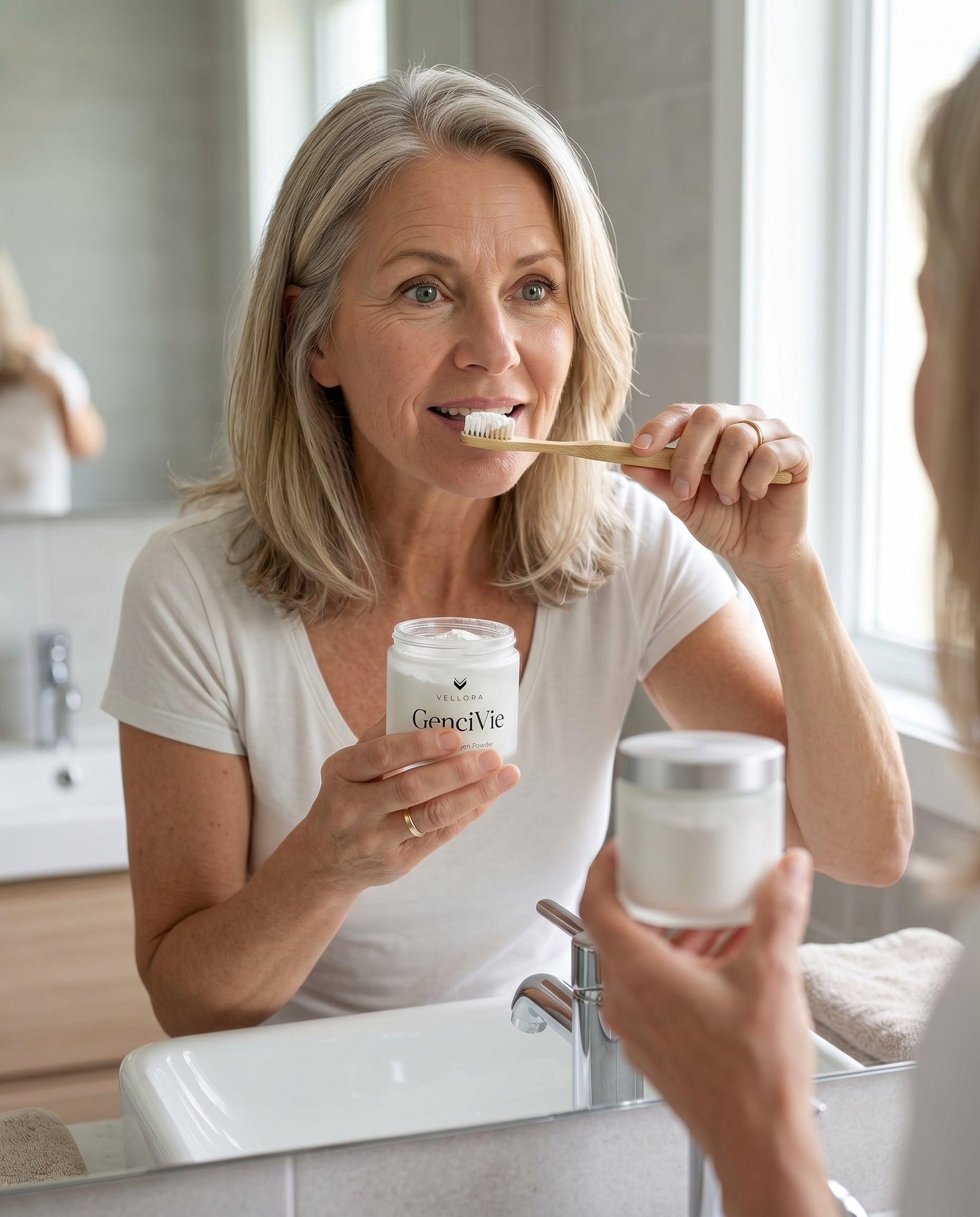
If swallowing collagen sends it everywhere except your gums, the logical fix is to put it where it's needed — directly on the gum tissue, during brushing. That's the approach behind GenciVie, a collagen brushing powder formulated for the way women's gums change with hormones.
You wet your toothbrush, dip it in the powder, and brush gently along the gum line for about 30 seconds, twice a day. Each use delivers 5,000 mg hydrolyzed Type I collagen, nano-hydroxyapatite to seal the exposed root tubules that cause sensitivity, and vitamin C, required to form new collagen at all.
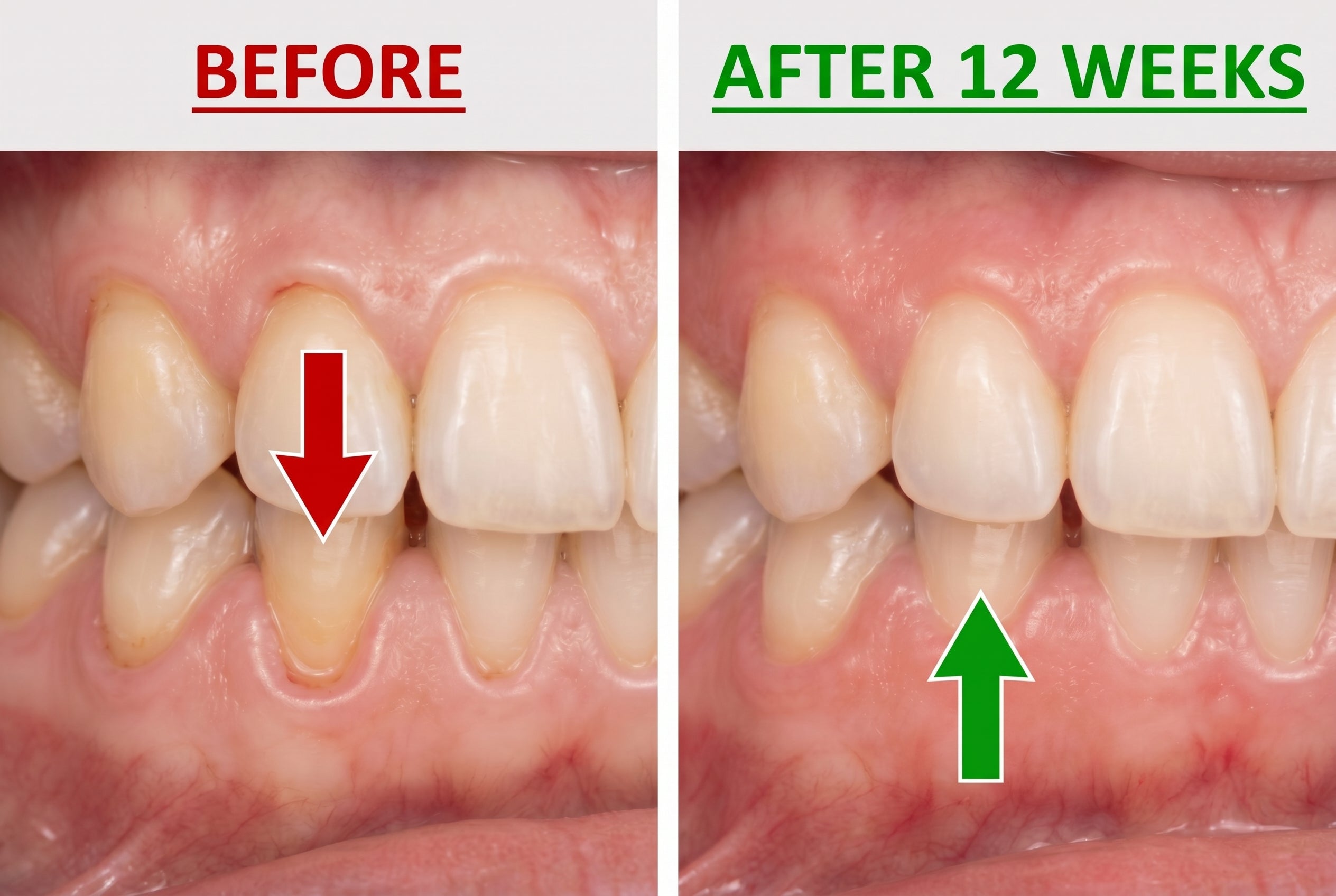
What women are reporting
The honest math
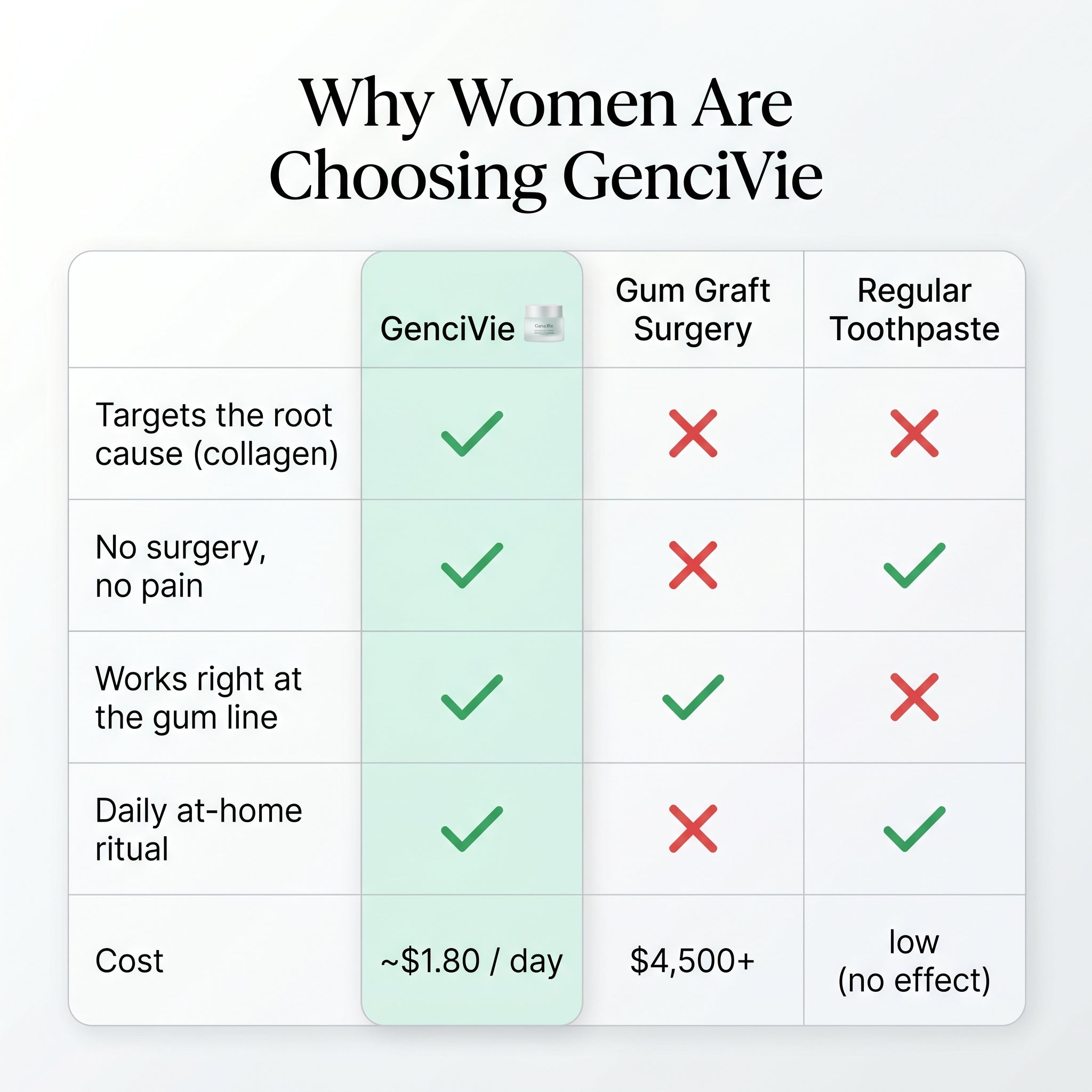
A single gum graft in Canada runs $4,500+, often uncovered, with weeks of recovery — and it does nothing about the collagen loss that caused the recession. GenciVie works out to roughly $1.80 a day. Five months costs less than a single crown.
Feed your gums what menopause took
1 month$54.90
3 months · free shipping$109.80
5 months · free shipping$164.70
90-day money-back guarantee. If your gums don't improve, you get every dollar back, no questions asked. It works for you, or it's free.
If you're going to spend money on your gums this year, spend the first $1.80 before you spend the first $4,500.
Feed your gums what menopause tookThis is an advertisement published by Vellora, not a news article, blog, or consumer-protection update. Statements describe the experiences of individual customers; results vary. GenciVie is an oral-care product and is not intended to diagnose, treat, cure, or prevent any disease. Continue to see your dental professional for diagnosis and treatment.